Growth strategy without fluff: three questions instead of a hundred slides
Eva GarrelUpdated
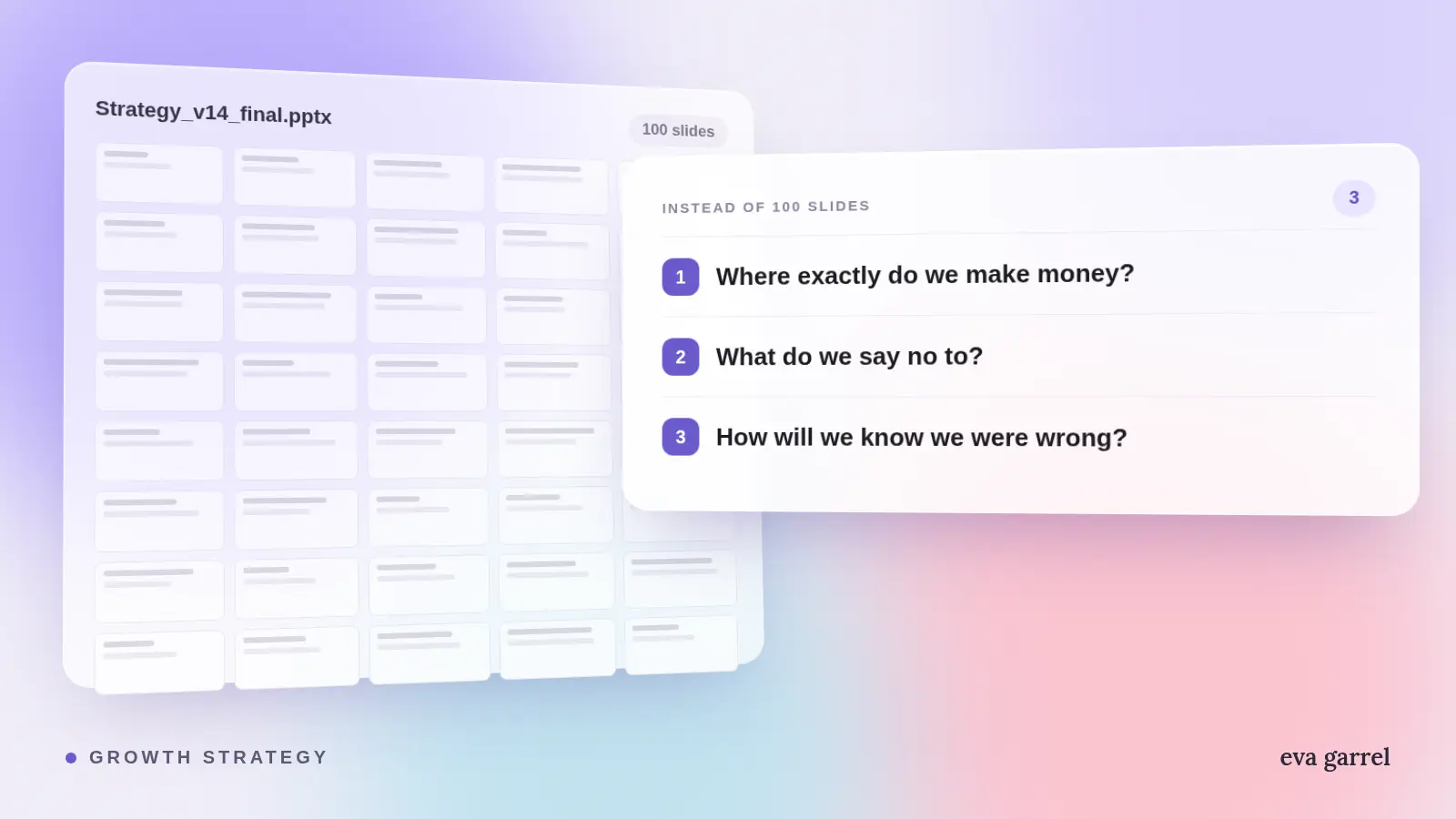
I have seen dozens of strategies that looked beautiful and changed nothing. The difference between a document and a strategy is that a strategy reduces the number of options. If the team can still do everything after the presentation, it was a report.
Question one: where exactly do we make money
Not “what is our market”, but which specific segment–product–channel combination earns today and can multiply tomorrow. Usually there are two or three of them, while ten compete for attention.
Question two: what do we say no to
Strategy is a list of no's. As long as every channel stays in the plan, the team has no focus and the budget has no leverage.
- Channels that do not scale when the budget doubles
- Segments with both a long cycle and a low ticket
- Projects that depend on a single person
Question three: how will we know we were wrong
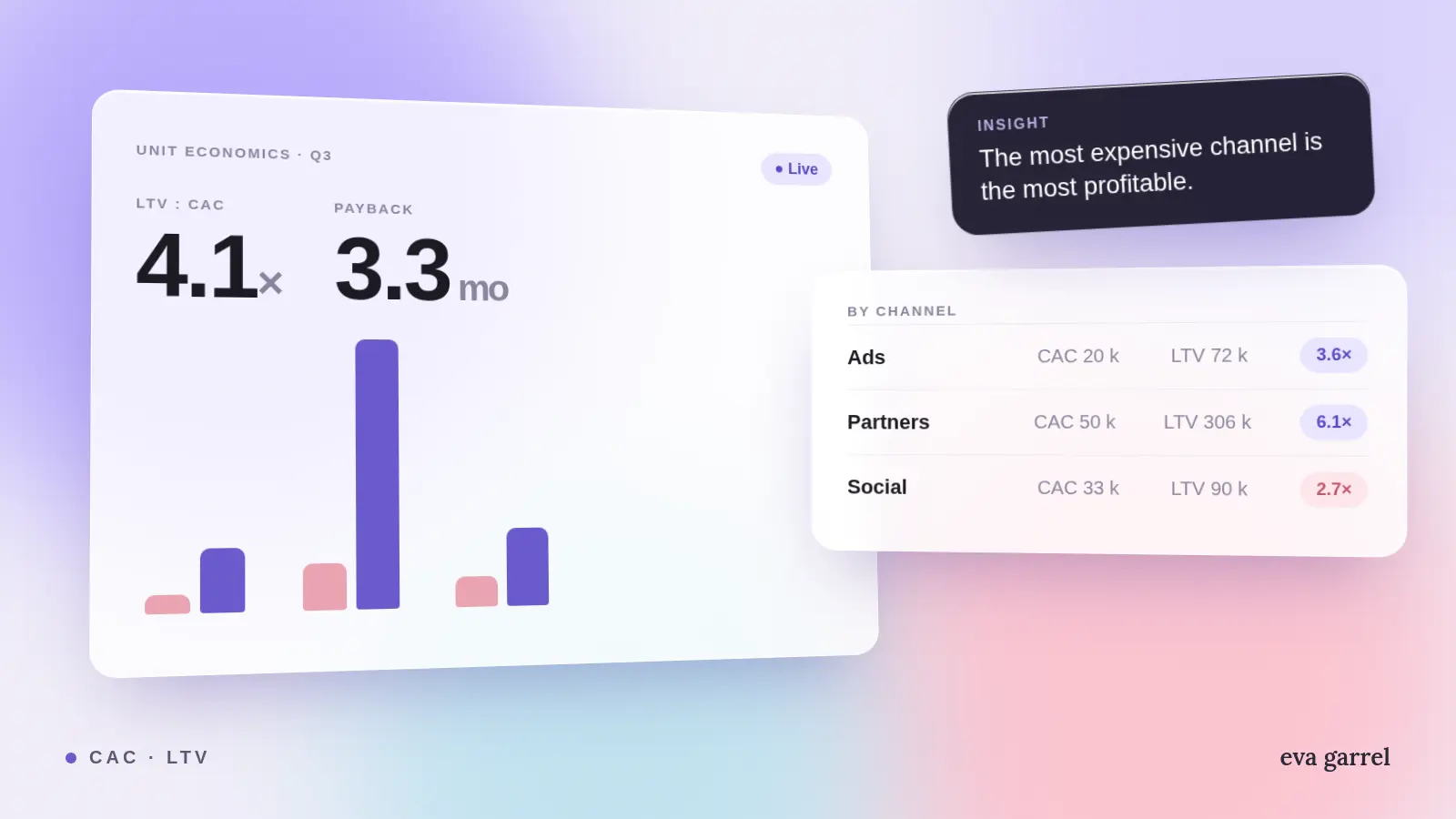
A pre-defined failure signal saves months. It turns a debate about taste into a hypothesis test: if CAC has not moved down in eight weeks, we close the direction instead of defending it.
If nobody has calculated your CAC yet, that is exactly where to start. How it works: marketing the board can read →
Marketing is not a separate function, it is part of the company's money. Every decision is signed with that in mind.
Where to start this week
- List three revenue sources and honestly estimate their ceiling
- Mark what you stop doing on Monday
- Set the date when you will check the hypothesis with numbers